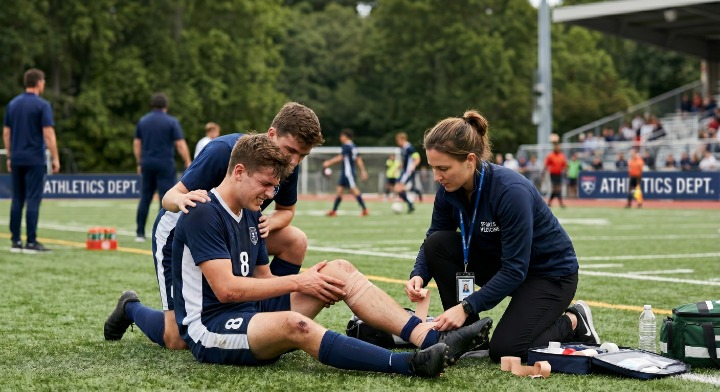
Every year, millions of people sustain sports injuries ranging from the weekend warrior to the expert-level sports celebrities. Whatever sport you play, whether it be football, running, or spending time in the gym, learning just about the most frequent sports injuries, as well as how to treat and prevent them, is key to remaining fit and active.
What Are Sports Injuries?
Sports injuries are the outcome of physical injury that happen during exercise, training or the competitive sport. There are two general types of injuries: acute injuries occur suddenly (for example, a sprained ankle), and chronic or overuse injuries develop gradually over time. Typical causes are inadequate warm up, overtraining, wrong technique and contact play.
10 Most Common Sports Injuries
1. Ankle Sprain
Ankle sprains are among the most frequently reported sports injuries. They occur when the ligaments around the ankle are overstretched due to a sudden twist or roll of the foot.
Treatment: Apply the RICE method: rest, ice, compression, and elevation.
Prevention: Strengthen the ankles regularly and always wear properly fitted footwear.
2. Knee Ligament Injury (ACL and MCL)
Common in football, rugby, and skiing, knee ligament injuries cause swelling, joint instability, and sharp localized pain.
Treatment: Physiotherapy is the first approach; severe cases may require surgical intervention.
Prevention: Build leg strength and practice correct landing and pivoting technique.
3. Hamstring Strain
The hamstring is one of the most common injuries for sprinters and footballers, it can be relatively simple, which classifies the injury as a grade 1 (small pain and discomfort), or can mean a complete tear of the muscle (grade 3).
Treatment: Rest, physiotherapy, and a gradual return to training.
Prevention: Include Nordic hamstring exercises and thorough warm-ups in your routine.
4. Shin Splints
Shin splints produce pain along the inner edge of the tibia and are particularly common in runners who rapidly increase their training load.
Treatment: Rest, ice, and anti inflammatory medication if it is deemed appropriate.
Prevention: Build training volume gradually and invest in supportive running shoes.
5. Tennis Elbow
Tennis elbow is an overuse injury that inflames the tendons attached to the outer elbow. Despite its name, it affects gym goers, manual workers, and office professionals just as frequently as tennis players.
Treatment: Rest, a supportive brace, physiotherapy, and sometimes corticosteroid injections.
Prevention: Use correct technique and progressively strengthen your grip.
6. Rotator Cuff Tear
Common in swimmers, cricketers, and anyone performing repeated overhead movements, rotator cuff injuries restrict shoulder movement and cause noticeable weakness.
Treatment: Physiotherapy for partial tears; surgery for complete ruptures.
Prevention: Strengthen the shoulder stabilizers and maintain healthy posture daily.
7. Groin Strain
Groin strains are frequently seen in football, hockey, and horse riding, causing inner thigh pain and restricted leg movement.
Treatment: Rest, the RICE method, and targeted physiotherapy.
Prevention: Strengthen the adductor muscles and perform a dynamic warm-up before every session.
8. Stress Fracture
Pressure fractures appear slowly as a result of repetitive influence and are also normal in joggers and athletes.
Treatment: Rest, offloading the affected area, and sometimes a boot or cast.
To prevent this: Allow sufficient time between sessions and ensure a calcium-rich diet.
9. Concussion
A serious concern across UK rugby, football, and boxing, concussion results from a blow to the head and presents with headache, dizziness, confusion, and memory difficulty.
Treatment: Immediate removal from play and a thorough medical assessment are non negotiable.
Prevention: Wear appropriate headgear and follow UK Sport concussion protocols at all times.
10. Plantar Fasciitis
Plantar fasciitis causes sharp heel pain due to inflammation of the tissue connecting the heel to the toes. It is particularly widespread among runners and regular gym users.
Treatment: Stretching programs, orthotics, and physiotherapy.
Prevention: Wear supportive footwear and strengthen the calf and foot muscles consistently.
General Tips to Prevent Sports Injuries
The first step in avoiding any injury is to have common sense, consistency. Always warm up and cool down properly. Use the correct equipment and footwear for your sport.
Chiropractic care is also a highly effective preventive tool. Learn more about how chiropractic care gives relief for sports injuries.
Conclusion
Sports injuries are an unavoidable reality for anyone who leads an active lifestyle, but with the right knowledge, most can be treated effectively and even prevented altogether. Do not be afraid to seek rehabilitation and professional help when necessary.
FAQs
Q1: What is the RICE method?
RICE stands for Rest, Ice, Compression, and Elevation. It is the standard first aid response for most acute sports injuries.
Q2: How long does a sports injury take to heal?
More minor injurie returns ti heal within one to two weeks. Things like an ACL tear or a stress fracture could take months.
Q3: When should I see a doctor for a sports injury?
Medical attention should be considered for severe pain, if the swelling does not improve and in case the patient has ongoing symptoms for 48 to 72 hours.
Q4: Can chiropractic care help with sports injuries?
Yes, Chiropractic care supports recovery, reduces pain, and restores movement.
Q5: Should I see a chiropractor even without pain?
Yes, Chiropractic care is highly effective as a preventive measure.